
BetterInductionHobs
Built-in cut-outs, 220–240 V tabletops, and three-phase commercial plant. Compare wattage and voltage on the model page before the carpenter cuts.
See models and specs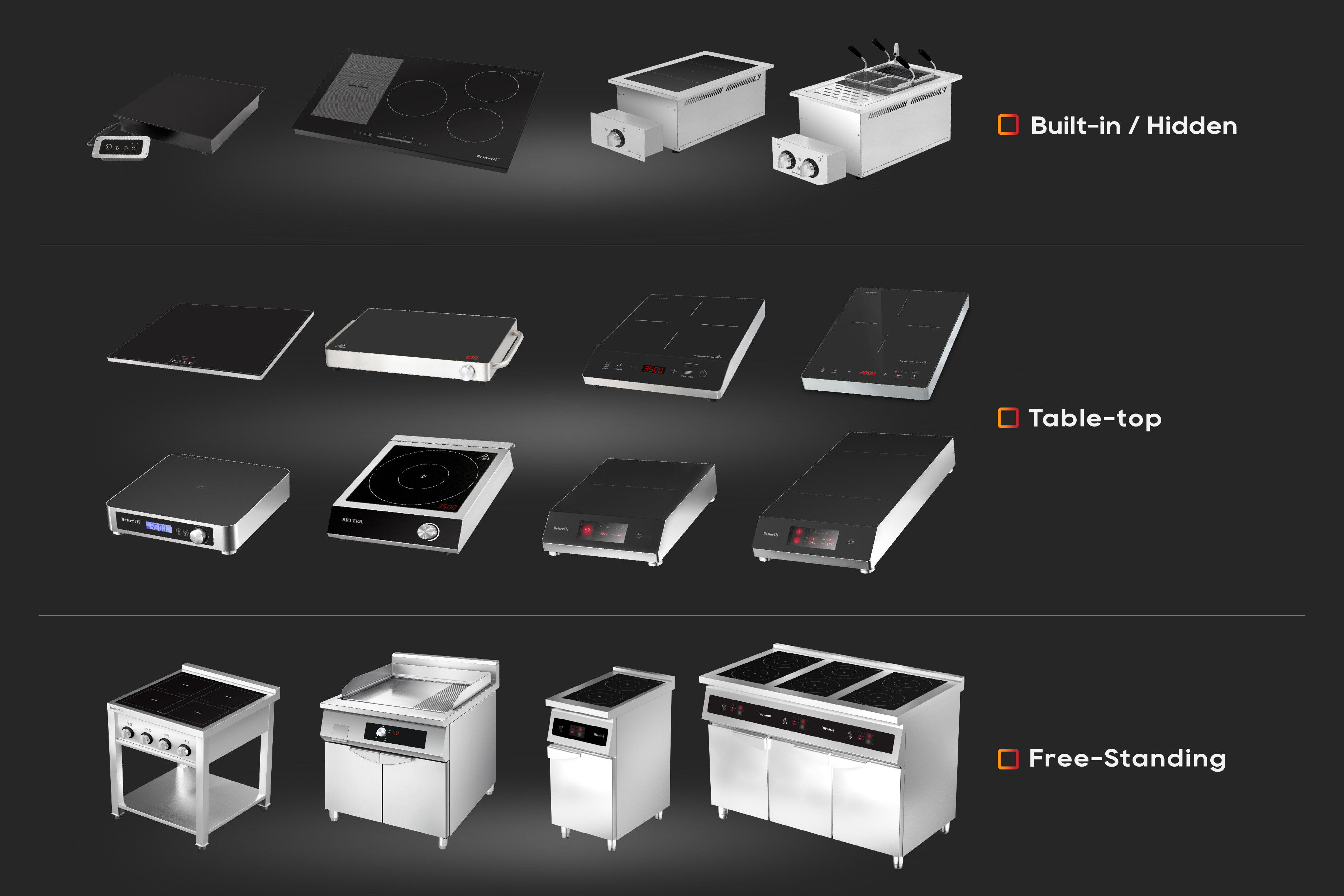
Kuala Lumpur showroom
Compare wattage, voltage, and cut-out before anyone cuts the counter.
In our Kuala Lumpur showroom we put built-in induction hobs, tabletop induction cookers, and commercial induction hobs on the bench so you can check glass type, pan coupling, and the written spec — not a lifestyle photo.
A 3.5 kW cooker needs a dedicated 220–240 V circuit. A 15 kW wok station is 380–420 V three-phase plant. Send the product page to the electrician first; we do not replace that calculation.
If the stone cannot be cut, specify a tabletop induction cooker. If stir-fry is the station, specify wok glass — a round kuali on flat glass will not heat. Start with the planning guides.
What to check before you order
Wattage in writing
Pantry class around 2 kW, commercial tabletop 3.5–5 kW, wok plant up to 15 kW. Read it on the product page, then size the board.
Two voltage classes
220–240 V single-phase for most tabletops and built-ins. 380–420 V 3N for EW5/5T ranges and the 15 kW wok station.
Built-in vs tabletop
Built-in needs this model’s cut-out and under-counter airflow. If the stone cannot be cut, specify a tabletop induction cooker instead.
Wok needs wok glass
A round kuali on flat glass heats in a ring. Specify wok glass or a wok station. Flat cookers are for sauté pans and stockpots.
Magnet test the pans
If a fridge magnet does not stick firmly to the base, the coil will not load. Test in the showroom before you buy a new set.
Rating plate, then trades
We confirm wattage and voltage. A licensed electrician connects the circuit; the carpenter cuts to the millimetres on that model’s page.